The goal
Score more points than your opponent in the frame. Points come from the balls you pot and from your opponent's fouls. When one player needs more points than are left on the table, they need snookers: the rule guide (F4) shows the points still on the table.
Table and balls
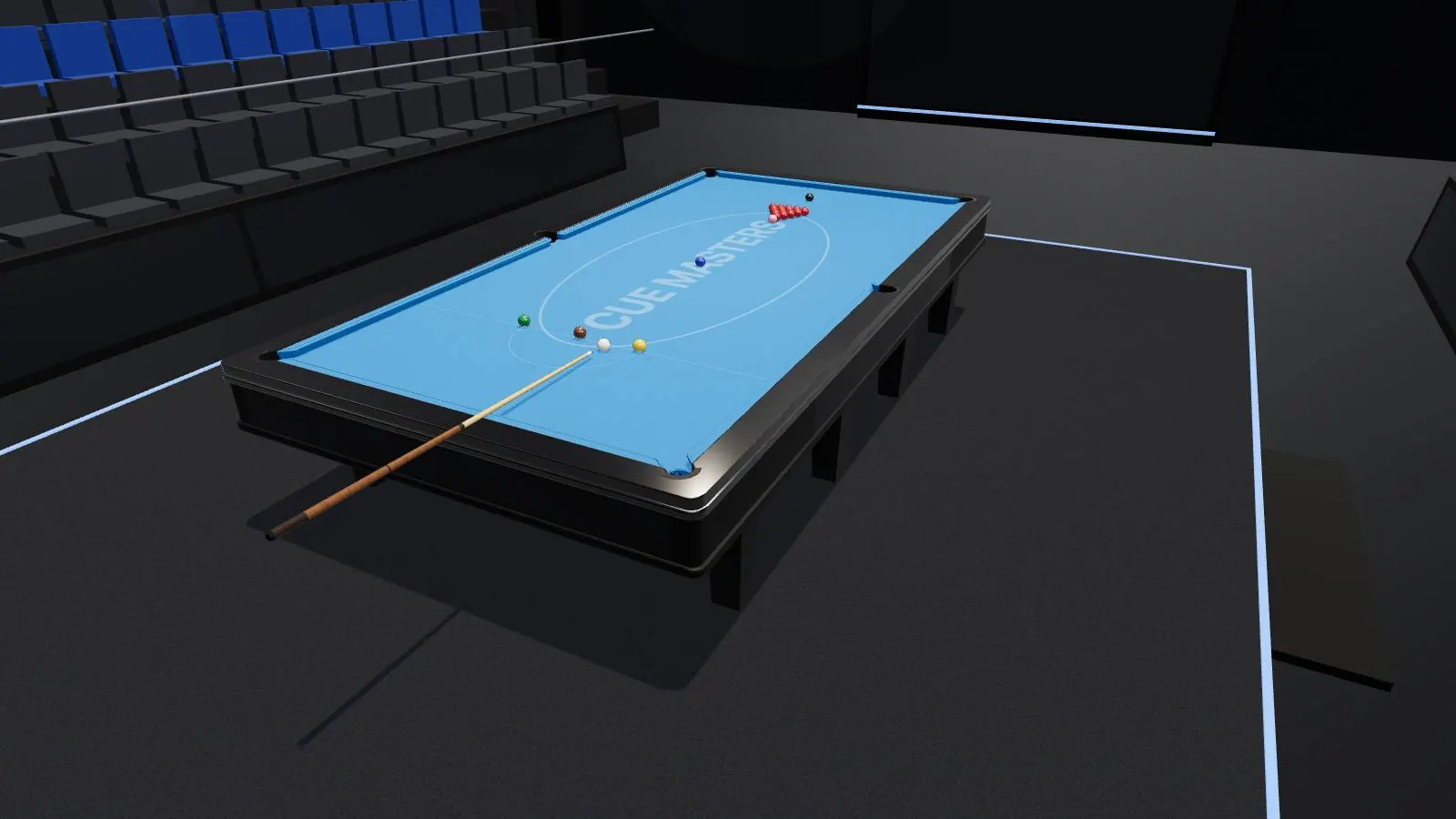
Each red is worth 1 point. The colours are yellow 2, green 3, brown 4, blue 5, pink 6 and black 7, each on its own spot. The first shot of the frame is played from the D, the half circle at the baulk end of the table.
A red, then a colour
While reds remain, pot a red, then a colour of your choice, then a red again. Every red that drops on a red shot counts, and a colour you pot goes back on its spot. Before the shot you can name the colour (keys 2 to 7); if you do not, the colour you hit first is the one you played.
Once the last red and the colour after it are down, the colours are potted in order from yellow to black and stay down.
Fouls
A foul gives your opponent 4 points, or the value of the ball involved when it is higher, up to 7. These are fouls:
- hitting no ball
- hitting or potting a ball that is not on
- the cue ball dropping into a pocket (the next shot is played from the D)
- a ball leaving the table
- moving a ball the cue ball rests against
- the shot clock running out
Nothing potted on a foul scores.
After a foul
Your opponent chooses to play on from where the balls lie or to make you play again (K). If you missed the ball on while a straight path to it was open, they can also have the balls put back where they were (R) and make you play again; a third such miss in a row with a full ball in view gives them the frame.
If a foul leaves your opponent snookered, they get a free ball: they may play any colour as if it were the ball on.
End of the frame
When only the black is left, the first score or foul ends the frame. If the scores are then level, the black goes back on its spot and a toss decides who plays first from the D. The next score or foul wins.
Casual rules
A table can use casual rules instead: after every foul the opponent places the cue ball anywhere, with no choice to make, no miss rule and no free ball. Frames move faster and beginners have an easier time.
Snooker at CueMasters tables
A table plays one frame or a race to 3, 5 or 7 frames, with a shot clock of 60, 90 or 120 seconds. The plates show the ball on and the current break, and F4 opens the rule guide with the points left.